Non-Stop Earrings: A Complete Guide to Materials and Care for 24-Hour Comfort Even on Sensitive Skin
Customers who visit our direct stores often ask, "I'm looking for earrings that I can wear all the time. Can the earrings you sell be worn all the time?"
When we spoke to them, we found that some people were unsure whether the earrings they were wearing were suitable for wearing all the time, and some even said that they had developed metal allergy symptoms after wearing the earrings they had purchased for a long time.
First of all, what kind of earrings can you wear all the time?
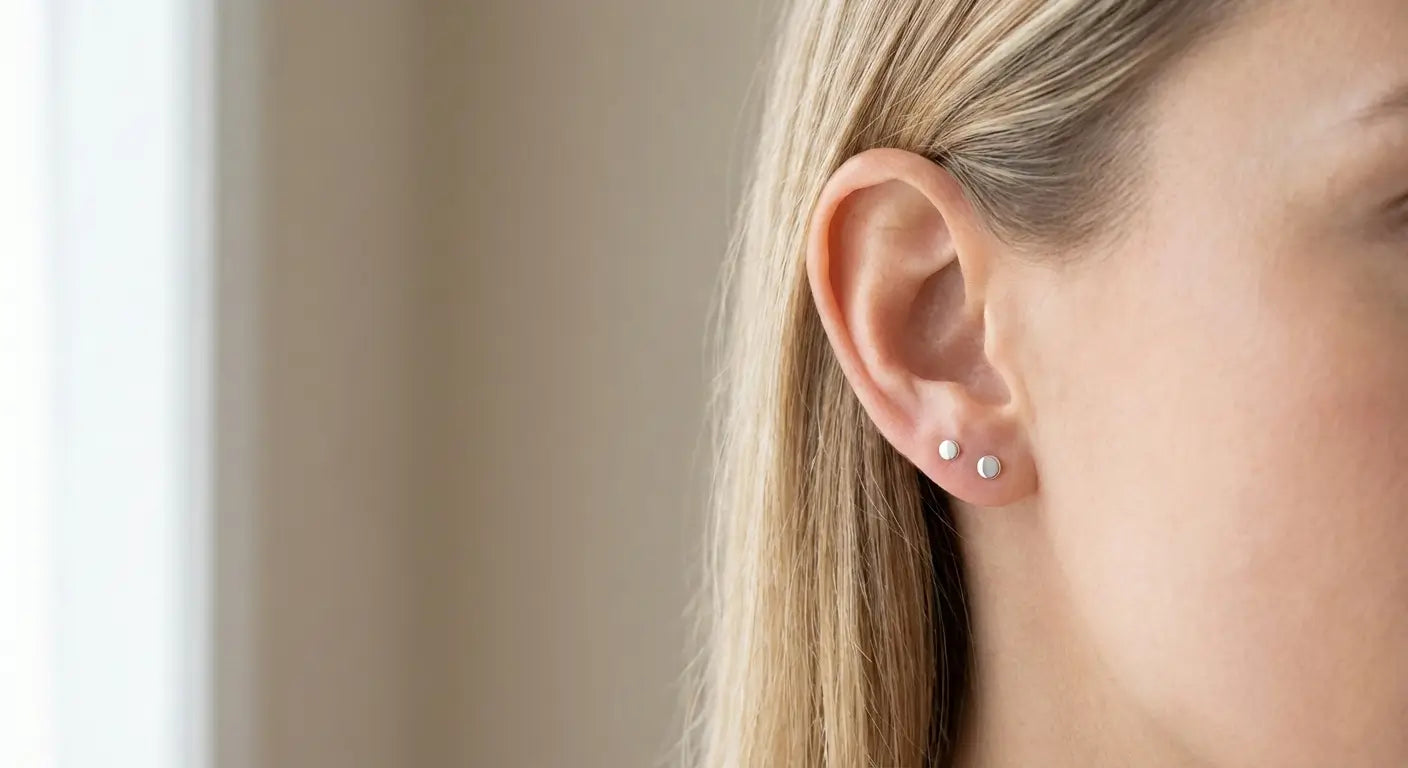
When you hear the phrase "non-stop wearing," many people probably imagine wearing their earrings most of the day, including when they shower or sleep.
There are three requirements for earrings that can be worn all the time.
・No symptoms of metal allergies ・Less fatigue due to the weight of the earrings ・The earrings are made of a material that does not deteriorate easily
Earrings that meet these conditions are considered "earrings that can be worn all the time."
Each brand offers a wide variety of materials and designs, so in this journal we will mainly explain how to choose earrings that you can wear all the time. We hope you enjoy reading.

What are permanent earrings? Advantages and disadvantages
1-1. Three benefits of wearing earrings
Why do you want to keep your earrings on? I think it's because there are many benefits to leaving them on, such as saving time and reducing the risk of losing your earrings. Let's take a look at each of these benefits one by one.
-
Shorten your morning routine
Taking time out of your busy morning routine to choose and wear earrings is a time-consuming and labor-intensive process for many people. By leaving your earrings on, you can free yourself from the hassle of morning chores and have more free time than usual.
-
Reduces the risk of losing earrings
Losing one earring can happen when you put them on in a hurry in the morning or when you are out and about. If you accidentally take it off, leaving it on will help prevent you from accidentally losing it.
-
Stabilizes the piercing hole
Immediately after getting your piercing, it's best to leave it in. Especially for cartilage piercings, not touching or moving it will speed up the healing process and is the quickest way to stabilize the piercing.

1-2. Two risks of wearing earrings all the time that you should know about and how to deal with them
Next, we will talk about the risks of wearing earrings all the time. There are two main disadvantages to wearing earrings all the time. The first is metal allergies, and the second is hair getting caught in the earrings and pressure on the ears.
| risk | Main causes | Minimum measures |
|---|---|---|
| Metal allergies | Nickel and copper eluted with sweat | Choose from titanium, 316L, 18k gold, or 925 silver |
| Pressure/catching | Insufficient hoop inner diameter/protrusion catch | Ensure the inner diameter is 1 mm larger than the ear thickness / Choose a backless earring |
The most important thing is to choose earrings made from materials that are hypoallergenic. Recommended materials are titanium, surgical stainless steel, 925 silver, and 18k gold. To prevent the earrings from getting caught in your hair or getting lost, it is a good idea to choose earrings with a catchless design.

Earring materials: Titanium, 316L surgical stainless steel, and 925 silver, perfect for long-term wear.
Your body is sensitive to the metal components in your piercing material. The material you choose can determine whether you'll enjoy a comfortable experience or suffer from unpleasant itching and irritation. Here, we compare three popular piercing materials: titanium, 316L surgical stainless steel, and 925 silver.
2-1. Piercing material specifications at a glance
| material | Main component | Weight ratio* | Nickel Leaching** | Recommended Gauge | Suitable for wearing continuously |
| Pure titanium | Ti 99.4% or more | 4.5 g/cm³ | 0 μg/cm²/week | 16-18G | ★★★ |
| 316L stainless steel | Fe+Cr+Mo | 7.9 g/cm³ | 0.1 μg/cm²/week | 16-18G | ★★★ |
| 925 silver | Ag92.5 Cu7.5 | 10.5 g/cm³ | 0.3 μg/cm²/week | 18G | ★★☆ |
*Specific gravity guideline. The smaller the specific gravity, the lighter the weight. **JIS compliant test: The smaller the number, the less allergenic the material.
2-2. Pure Titanium—A Feather-Light and Reliable Material
The moment you put them on, you'll feel as if you're not wearing anything at all. Pure titanium's incredible lightness will reduce the pressure and fatigue you feel when wearing earrings for extended periods of time. It's also highly hypoallergenic, so even those with sensitive skin can wear them with peace of mind.

2-3. 316L Surgical Stainless Steel—A Material That Combines Cost-Effectiveness and Toughness
316L surgical stainless steel, which contains chromium and molybdenum, is a highly durable material that can withstand sweat and hot springs. Hoop-type earrings are popular among men who prefer not to remove their earrings even during active activities like running or saunas. However, be careful of the weight. If you choose a size with an outer diameter of over 12mm, we recommend keeping the thickness below 1.2mm.

2-4. Silver 925—a natural material with an elegant texture
The appeal of 925 silver is its soft, delicate luster, unique to natural minerals. It beautifully brightens and enhances the wearer's skin tone. However, because 925 silver contains a small amount of copper to increase its strength, it may darken or discolor with prolonged wear or sweat.

How to enjoy wearing earrings while sleeping, playing sports, or swimming
·hot spring
Even if you choose non-stop earrings, it would be a waste to have to take them out every time you sleep or play sports. Here we'll focus on three situations: "sleeping," "playing sports," and "swimming pools and hot springs." We'll explain techniques to prevent problems in each situation.
3-1. Sleep comfortably – Eliminate friction between your pillow and earrings
What can disrupt a peaceful night's sleep is the small rustling noise and unpleasant friction caused by hoop earrings that are left in contact with the pillowcase. If the earring back gets caught on the pillowcase, it can cause injury. To ensure a good night's sleep, start by trying to eliminate these small stresses.
| problem | Solution Item | Mini Procedure |
| Pain caused by friction with the pillow | Donut Pillow | Adjust your sleeping position so that your ears are in the center hole |
| If you lie face down, your ears will get crushed. | silk pillowcase | Friction coefficient from 0.2 to 0.06. Reduced redness the next morning. |
| Only one ear is stuck | Hairband | Wraps around the ears to prevent unconscious tossing and turning |

3-2. Stay comfortable while playing sports—choose earring materials that are resistant to sweat and impact
The most important thing when choosing earrings to wear while playing sports is to choose a material that is resistant to sweat and water. Also, don't forget to check whether the earrings are made to be durable enough not to fall off or deform even during intense exercise. By paying close attention to both the durability of the material and the structure of the earrings, you can achieve both comfort and safety while playing sports.
-
Material priority : Titanium ≒ 316L > Silver 925
Titanium and 316L surgical stainless steel are sweat-resistant and strong, making them ideal for sports. 925 silver is beautiful, but it's less sweat-resistant and durable. Choosing the right material for your sports watch is important, so keep this priority in mind.
-
Fixation method : Captive bead ring or threaded internal.
We recommend using a "captive bead ring (CBR)" or "screw-on internal type" to secure your piercing when playing sports. Captive bead rings use small balls to securely fasten the ring, making them less likely to come off even during intense activity. On the other hand, screw-on internal types are less likely to catch on things and cause less irritation to the skin.
| Event | Recommended Piercings | Points to note |
| running | Titanium hoop 1.2 mm | Does not get caught when putting on or taking off a hat |
| Weight training | 316L stud 3 mm | Be careful of pressure when carrying the barbell |
| Yoga | 925 Sterling Silver Rhodium 8mm Hoop | Inverted poses require mat placement that does not put pressure on the ears |

3-3. Safe for hot springs and pools: Tips and materials to prevent earrings from deteriorating due to water quality
The sulfur in hot springs can cause silver to turn black, and the chlorine in swimming pools can leach metal ions from earrings. In these places, the risk of discoloration or loss increases, so the safest thing to do is to remove your earrings. However, if removing them is difficult, follow the steps below to protect your earrings from water damage.
-
Preparation before bathing :
Before bathing, apply a thin layer of Vaseline to the surface of your piercing to create a protective barrier. This protective layer of Vaseline prevents the water components of hot springs and pools from coming into direct contact with the surface of your piercing, minimizing discoloration and metal leaching. After bathing, be sure to rinse thoroughly and dry off thoroughly.
-
After bath care :
After bathing, it's important to first remove any hot spring components or chlorine that may have adhered to your piercings. Rinse your piercings thoroughly with fresh water for at least 30 seconds. After rinsing thoroughly, dry them thoroughly with a clean towel or tissue to keep them in good condition.
-
Drying the earrings :
First, gently blot the moisture with clean tissue. Then, set a hair dryer to low setting and blow lightly for about 5 seconds from a distance of about 10 cm from the earrings to completely remove all moisture. Drying quickly will effectively prevent discoloration and deterioration of the metal of the earrings.

Chapter 4 | Men's Hoop Earrings Size Guide: How to Choose "Non-Slip Earrings" for Comfort at Work and on Holidays
The most important thing when choosing men's earrings is to find the perfect balance between subtly expressing your individuality. We'll explain the ideal dimensions of hoop earrings, which can be worn comfortably 24 hours a day, from business to personal use, using an easy-to-understand chart and actual examples of how they're worn.
4-1. Hoop earring size chart for men's lob sizes
| Outer diameter | Thickness | Suitable ear thickness* | Appearance | scene |
| 8 mm | 1.0 mm | ~4 mm | Point glow | Office/Suit |
| 10 mm | 1.2 mm | 4 to 6 mm | Modest hoops | Business casual/date |
| 12 mm | 1.2 mm | 6-7 mm | Moderate presence | Holiday casual |
| 14 mm | 1.2 to 1.6 mm | 7mm and up | Make a strong statement | Street/Live |
*Measure the thickest part of your earlobe with a vernier caliper, and the inner diameter should be "ear thickness + 1 mm".

4-2. Recommended earrings by material: Choose titanium, 316L, or 925 silver depending on the occasion
-
Titanium 1.2 mm x outer diameter 10 mm
: Black or Matte SilverThese versatile earphones are perfect for any occasion, from business to casual wear. Lightweight and durable pure titanium earphones are ideal for preventing metal allergies and reduce ear strain even when worn for extended periods. The subdued black and matte silver colors complement any outfit and add a touch of individuality.
-
316L 1.0 mm × outer diameter 8 mm
: Captive ring structure for added securityThe captive ring design prevents the earrings from falling off, significantly reducing the risk of losing them while at work or on the move. The sharp, sophisticated, and small size (1.0 mm thick x 8 mm outer diameter) complements a suit perfectly and creates a casual, cool impression. Highly durable, these earrings are perfect for everyday wear.
-
925 Silver 1.2 mm x Outer diameter 12 mm
: Elegant silver hoops that enhance your style
The subtle presence and soft shine of silver add a touch of elegance to casual holiday style. The 12mm diameter sits comfortably on the ears, creating a relaxed impression. If you're concerned about sweat or discoloration, simply rinse lightly with fresh water after use and wipe off any moisture with a soft cloth or tissue to maintain its beautiful shine.
4-3. Comfort is made all the difference with clasps - Tips for choosing clasps for earrings that you can wear all the time
When wearing earrings 24 hours a day, one thing that is often overlooked is the construction of the clasp. Even if the design is attractive, if the clasp is difficult to use or comfortable to wear, it can be difficult to wear for long periods of time. Here we will compare the types of common clasps and their features, and give you tips on how to choose the most comfortable clasp that is perfect for you.
Even if the clasp is well-constructed, there is still a chance that it may get caught on your hair or clothes. The most important thing to be careful of when wearing earrings is that they may get caught on your hair or clothes when you change clothes. The best option is to choose hoop earrings with a catchless design that does not have a clasp.
| fastener | Hard to come off | Comfort level when turning over | image |
| Click Hoop | ★★★ | ★★★ | Secure lock with one touch |
| Captive Beads | ★★★ | ★★☆ | The beads are hard to remove, but there is a trick to putting them on. |
| Screw-type barbell | ★★☆ | ★★☆ | For cartilage, also suitable for lob |

Chapter 5 | Metal Allergy Q&A - 8 Tips to Achieve "No Itching" Even When Wearing Contact Lenses All the Time
Even small piercing holes are still wounds. If metal ions seep into the wound, it can cause unpleasant symptoms like redness and itching. However, as long as you understand how to choose the right material and take proper care of your piercing, you don't have to worry about leaving it in 24 hours a day. Here are answers to eight common questions.
5-1. Frequently asked questions about metal allergies
| Q | A | Keyword utilization |
| What are the signs of the disease? | Redness, itchiness, blisters. Remove and wash and observe for 48 hours. | Metal allergy symptoms |
| Once it develops, is it for life? | If it's constitutional but mild, you can try again with different materials. | Metal allergy recurrence |
| Is silver 925 okay? | Rhodium coating or low copper alloys can be used for a long time | Silver 925, always on |
| What brands do you recommend? | Choose a brand that uses medical-grade titanium for safety | Recommended Brand Titanium |
| Hoop earrings or studs: which is safer? | It depends on the material. If it's titanium, either is OK. Plated hoops are not allowed. | Hoop earrings for men |
| What to do if you get itchy? | Cooling → Saline → Anti-inflammatory cream. If there is no improvement, go to a dermatologist. | Metal allergy itchy |
| Should I remove the MRI scan? | Titanium is acceptable, but 316L and 925 are generally excluded. Check with your hospital. | Metal allergy MRI |
| What can people who sweat a lot while sleeping do to prevent this? | Keep the area around your ears dry with powder before going to bed | Wearing earrings while sleeping |
Itching is a small sign from your ears. Don't ignore it, but understand the cause and take the right measures to restore a comfortable, calm glow to your ears. Don't miss these small messages from your ears.

5-2. To prevent metal allergies: Revisiting the important steps in choosing earring materials
Patch test: Check for redness and itching after 48 hours
To wear earrings safely, it's important to check beforehand whether the material is suitable for your skin. Apply the earring material to an inconspicuous area, such as the inside of your arm or behind your ear, for 48 hours and check for any redness, itching, or other reactions. If there are no reactions, you can wear them safely.
Titanium is recommended as your first choice: peace of mind like metal allergy insurance
If you're unsure which material to choose for your earrings, the first thing you should consider is pure titanium. It's medical-grade, gentle on the skin, and has an extremely low risk of allergies, giving you peace of mind like an "insurance" against metal allergies. Titanium is the perfect first choice, especially for those new to earrings or with sensitive skin.
Once you get used to it, move on to "316L surgical stainless steel" or "925 silver": Start with rhodium-coated earrings for safety
Once you've gotten used to wearing pure titanium earrings and have confirmed that you don't have any metal allergies, you can expand your options to 316L surgical stainless steel or 925 silver, which come in a wide variety of designs. For your first try, it's a good idea to choose earrings with a rhodium coating, which prevents discoloration and the leaching of metal ions.
5-3. To prevent metal allergies: Three essential care items you should have on hand
0.9% saline spray: A must for cleaning your piercing every night
To prevent metal allergies, it's important to keep your piercing hole clean every day. A 0.9% saline spray, with the same osmotic pressure as the human body, gently washes away dirt and metal ions without irritating the wound. Incorporating this into your nightly care routine can help prevent problems.
Non-steroidal anti-inflammatory cream: For early treatment of redness and itching
If you experience mild redness or itching around your piercing, early treatment is essential. A non-steroidal anti-inflammatory cream is gentle on the skin and can gently alleviate early symptoms. Apply it quickly before the condition worsens to restore comfort.
Silicone ear pads: Gently relieve pressure on your earrings when using a headset or sleeping
When using a headset or sleeping, pressure on the ear can irritate the piercing. Silicone ear pads reduce pressure on the piercing and ear, allowing you to stay comfortable. Eliminating small everyday stresses will significantly improve your comfort 24 hours a day.

Chapter 6 | Final checklist before purchasing: 5-second confirmation before clicking for "zero mistakes"
If you neglect to check carefully when choosing permanent earrings online, it can lead to pain and uncomfortable pressure later on. We've put together an easy-to-understand table that you can quickly check in just five seconds before adding them to your cart.
6-1. Final check of size, gauge and fasteners
| item | Rob Recommended | Helix Recommended | How to check |
| gauge | 18G (1.0 mm) | 16G (1.2 mm) | Product specifications → gauge column |
| Inner/Outer Diameter | Ear thickness +1 mm (around 10 mm) | Ear thickness + 1 mm (6-8 mm) | Measure ear thickness with a vernier caliper |
| fastener | Flat Push Back | Click hoop or internal | Check the shape with an enlarged photo |

6-2. Material labeling and allergy policy
-
Make sure it is clearly stated as nickel-free/suitable for those with metal allergies.
Before purchasing, be sure to check whether the earrings' material and product description clearly state that they are "nickel-free" or "allergy-friendly." This labeling allows those with sensitive skin or allergies to wear them with peace of mind.
-
Check the material label, such as 925 silver or 18k gold. Alloys and brass are not allowed.
Check the material information on the product page to see if it clearly states the material, such as 925 silver, 18k gold, pure titanium, 316L surgical stainless steel, etc. If it uses unclear materials that are likely to cause metal allergies, such as "alloy" or "brass," it's best to avoid it.
6-3. 48-hour monitoring after opening
-
Test the device every six hours to see if there is any pain, pressure, or itching.
-
Conduct a cleaning test: After cleaning with saline before going to bed, check that it is completely dry and odor-free.
-
Conducting a functional test: Check for any snagging or discomfort when putting on or taking off the pillow, earphones, or mask.
6-4. Choosing earrings from online stores is based on numbers and intuition
When choosing earrings, once you have checked the basic comfort by looking at the numbers (size and material), it's time to go by feel. If you feel a sudden spark of excitement in front of the mirror, then that's the perfect earring for you. When excitement and comfort come together, your ears will transform into the best stage for shining with confidence 24 hours a day.

Chapter 7 | Summary: Making wearing earrings 24 hours a day a part of your everyday life
If you've read this far, you already have the four important keys to permanent earrings: material, placement, size, and care. We've reorganized these important points and summarized the specific actions you should take next.
7-1. Review the important points of permanent earrings in 5 lines
-
The basic materials to choose from are titanium, 316L surgical stainless steel, and 925 silver: essential for preventing metal allergies.
-
The size is designed to provide a margin of "ear thickness + 1mm" : zero pressure for 24-hour comfort.
-
Positioning affects comfort : Lobs are the most comfortable, but cartilage (helix and tragus) requires careful positioning.
-
The key to hoop earrings is the clasp : choose a type that won't get caught, such as a click hoop or catchless type.
- Final checks with the pre-purchase checklist: Avoid mistakes when buying online.
7-2. The first step to wearing earrings 24 hours a day: What to do next based on your type
-
For first-timers : Experience 24-hour comfort with pure titanium stud earrings.
-
For those who prefer hoop earrings : Ensure daily stability with 316L surgical stainless steel hoop earrings with an outer diameter of 10 mm and a thickness of 1.2 mm or less.
-
For those who value design and enjoy it : Try silver 925 hoop earrings that combine design and comfort.
Just by wearing a small, permanent earring on your earlobe, your everyday life will become just a little more vibrant. Your everyday life will suddenly begin to shine - try and experience this small change.
7-3. A new everyday life that starts from your ears ── Using natural materials for small earrings
Non-removable earrings are more than just accessories you never take off. They may feel like a part of your body, quietly accompanying you in your everyday moments, whether it's when you wake up in bed in the morning, relaxing at a cafe in the afternoon, or walking home in the pleasant night breeze.
Since it will be a part of your body, I would recommend choosing natural materials such as 925 silver or 18K gold if possible. While titanium and surgical stainless steel are certainly inexpensive and convenient materials, they are chemically manufactured alloys. To put it bluntly, they are like fast food.
Even if the taste and nutrients are chemically the same, the way they are made and the way they feel when you actually eat them can be completely different. I think the same can be said for choosing jewelry. I hope that after reading this, you will think about your body and choose natural materials.